Overtourism in Bologna: the problem isn’t tourists, it’s where they end up
Bologna has never been this visited. The data on arrivals and short-term rentals, what overtourism really means, and why the answer is to spread visitor flows, not stop them.
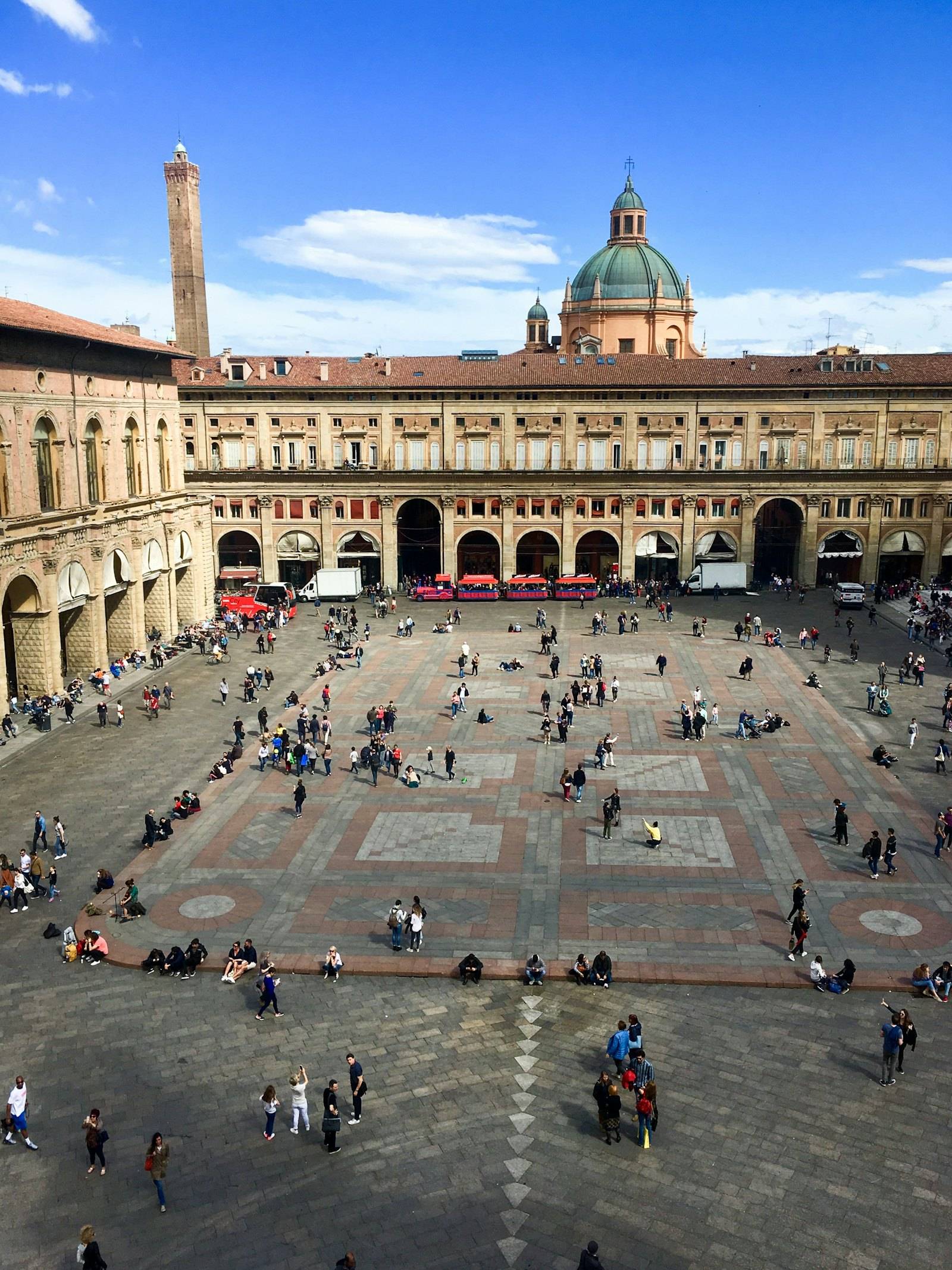
Bologna has never been this visited. In the first eight months of 2025 the Municipality recorded 1,455,589 tourist arrivals, 7.6% more than the same period of 2024, and 3.37 million overnight stays. 61% of arrivals were international, led by the United States, Germany and the United Kingdom. Over the whole of 2025, according to the Ires Emilia-Romagna and Filcams Cgil Observatory, Bologna overtook Rimini as the region’s top destination by number of arrivals.
For a city long considered a place people pass through, that is a change of scale. And like every change of scale, it has a cost.
What we mean by overtourism
The World Tourism Organization (UNWTO) describes overtourism as the impact of tourism on a destination, or parts of it, that excessively harms residents’ perceived quality of life or the quality of visitors’ experiences.
The important part is “or parts of it”. Overtourism is rarely about the total number of visitors. It is about concentration: the same streets, at the same hours, along the same routes. That is where a street stops being a place people live and becomes a shop window.
Where it shows, in Bologna
The clearest signal is housing. In December 2024, according to Inside Airbnb data reported by il Resto del Carlino, the city had 4,785 Airbnb listings, 76.6% of them entire apartments. The concentration is stark: 1,733 listings in the Santo Stefano district alone and 1,499 in Porto-Saragozza, that is, in the historic centre and the areas right next to it.
In a university city where demand for long-term rentals is already high, every apartment that moves to short-term tourism is felt. Unsurprisingly, in 2025 the Emilia-Romagna Region proposed new planning rules for short-term rentals that let municipalities define zones and caps, and the Municipality of Bologna announced a halt to new change-of-use permits in the historic centre.
Then there are the less measurable signals: historic shops giving way to formats designed for passers-by, queues always in the same spots, food as an attraction rather than a culture.
Why the answer isn’t stopping tourists
Tourism creates jobs, opens venues and keeps businesses alive that would otherwise close. The problem isn’t that people arrive. It is that they all end up in the same hundred metres and the same ten places, while independent businesses, the ones that need that value most, stay off the map.
Rankings amplify this. A place with many reviews gets more, appears in more lists, draws more people. Anyone not already at the top struggles to be seen. And the more numerous and messy the sources, the more people fall back on those top entries “because everyone says so”.
What Glocal does, concretely
Glocal is a service that hosts and venues offer their guests through a QR code. It currently covers Bologna’s historic centre: it is where almost every visitor arrives and where the pressure is strongest. That is exactly why it is the right place to choose better. There are four criteria:
- Independents first. Trattorias, workshops, artisans and venues run by people who live in the city, before chains and replicable formats.
- A few places, verified. A short, checked selection, instead of the endless list that pushes everyone towards the same top ten.
- Practical information. Up-to-date hours, clear addresses and tips for getting around on foot or by public transport.
- Everything in one place. Less time cross-checking ten sources, more time looking around.
It is not a solution to overtourism. It is one piece of it, within reach of anyone who hosts guests.
What travellers can do
- Ask your host where they go, not where everyone goes.
- Shop in the centre’s workshops and markets, not only where people take photos.
- Walk, cycle or take the bus: much of the historic centre is a limited-traffic zone.
- Look down the side streets too: the centre doesn’t end at Piazza Maggiore.
- Under the porticoes are someone’s front doors. Keep your voice down at night.
More guests shouldn’t mean less city. It depends on how we choose where to send them.